 Scale
ScaleHow To Do an Ecommerce CRO Audit in 6 Steps (Complete Guide)
Learn how to conduct a comprehensive ecommerce CRO audit. 6-step framework with tools, checklists, metrics, and real examples. Increase conversion rates systematically.

Your store gets 10,000 visitors per month but only 200 sales.
That's a 2% conversion rate. Industry average is 2-3%, so you're "normal."
But what if you could get to 4%? That's 400 sales. Double your revenue with the same traffic.
This is what a CRO (Conversion Rate Optimization) audit does.
It systematically identifies why visitors aren't converting and gives you a prioritized action plan to fix it.
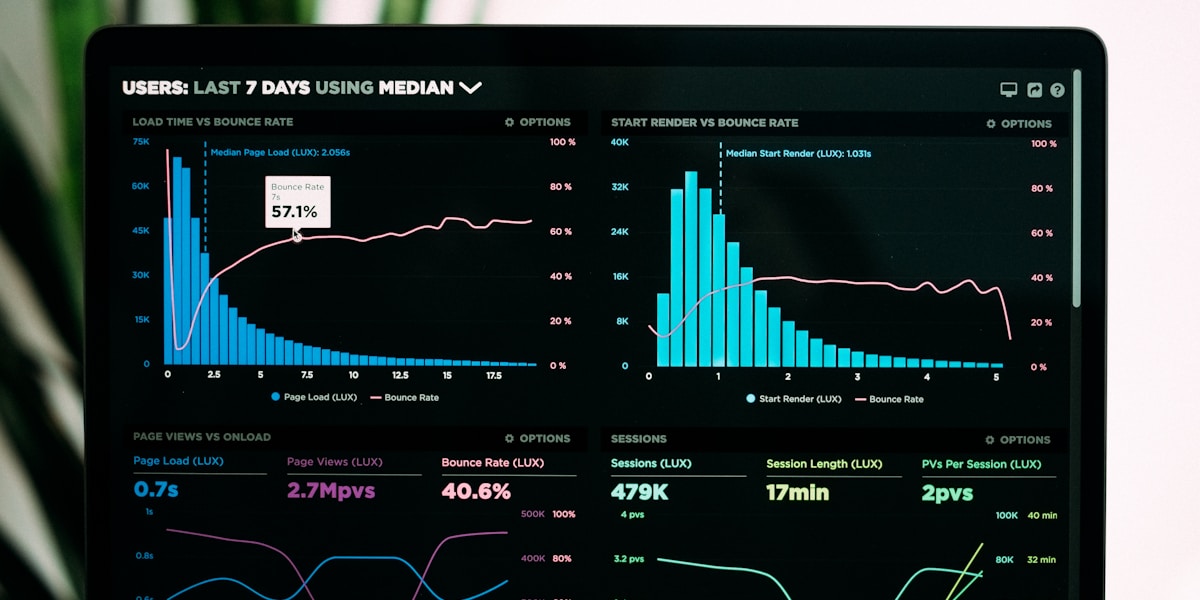
Most store owners skip CRO audits and jump straight to random optimizations: "Let's change the button color!" or "Maybe we need a popup!"
This is backwards.
A proper CRO audit tells you exactly what's broken, why it's broken, and what to fix first for maximum impact.
Here's our 6-step framework for conducting a comprehensive ecommerce CRO audit that actually drives results.
What Is an Ecommerce CRO Audit?
A CRO audit is a systematic analysis of your ecommerce site to identify:
- Where visitors drop off (conversion funnel leaks)
- Why they drop off (friction points, trust issues, confusion)
- What to fix first (prioritized by impact and effort)

What it's NOT:
- Random website critiques ("I don't like this color")
- Guessing what might work
- Following generic best practices without data
- One-time fixes (CRO is ongoing)
What it IS:
- Data-driven analysis
- User behavior insights
- Systematic identification of problems
- Prioritized action plan
Typical findings from CRO audits:
- Homepage doesn't pass 5-second test (visitors don't understand what you sell)
- Mobile checkout has 3x higher abandonment than desktop
- Product pages missing key information (size guides, shipping info)
- Site speed on mobile is 5+ seconds (losing 50% of visitors)
- No trust signals at critical decision points
Let's walk through how to conduct your own audit.
Step 1: Set Up Proper Analytics & Tracking
Time investment: 2-4 hours Impact: Foundation for all other steps
You can't audit what you can't measure.
Before analyzing anything, ensure you're tracking the right data.
What to Set Up
1. Google Analytics 4 (GA4)
Essential metrics to track:
- Traffic sources (where visitors come from)
- Bounce rate by page
- Average session duration
- Pages per session
- Conversion rate overall and by traffic source
Key events to configure:
- View product
- Add to cart
- Begin checkout
- Add payment info
- Purchase
- Newsletter signup
- Account creation
2. Enhanced Ecommerce Tracking
Track the full funnel:
- Product impressions
- Product clicks
- Add to cart
- Remove from cart
- Checkout steps
- Purchases
3. Shopify Analytics (if using Shopify)
Shopify's built-in analytics show:
- Sales by traffic source
- Sales by location
- Top products
- Returning customer rate
- Average order value (AOV)
4. Heatmap & Session Recording Tools
Recommended tools:
- Hotjar (heatmaps, recordings, surveys) - $39/month
- Microsoft Clarity (free, excellent recordings)
- Lucky Orange (heatmaps + live chat) - $10-50/month
What to track:
- Click heatmaps (where users click)
- Scroll maps (how far users scroll)
- Move maps (mouse movement patterns)
- Session recordings (actual user behavior)
5. Form Analytics
Track form interactions:
- Which fields users struggle with
- Where they abandon forms
- Time spent on each field
- Error messages triggered
Tools:
- Hotjar Form Analytics
- Google Analytics form tracking
- Zuko (form analytics specialist)
Data Quality Checklist
Before proceeding, verify:
- GA4 is tracking all pages correctly
- Conversion events fire correctly (test with Tag Manager)
- E-commerce tracking shows revenue data
- Heatmaps have collected 1,000+ page views per critical page
- Session recordings are capturing mobile and desktop
- At least 30 days of data collected (60+ days ideal)
Common setup mistakes:
- Tracking code only on homepage
- Double-tracking (GA4 + Universal Analytics both active)
- Conversion events not configured
- Filters excluding important traffic
- Not tracking logged-in vs logged-out users
If your data is incomplete, wait.
Better to spend 2-4 weeks collecting proper data than make decisions on bad data.
Step 2: Analyze Traffic & User Behavior
Time investment: 3-5 hours Impact: Identifies where problems exist
Now that you're tracking data, analyze it to understand user behavior.

Traffic Analysis
Key questions to answer:
1. Where do visitors come from?
Check GA4 → Acquisition → Traffic acquisition
Typical breakdown:
- Organic search: 30-50%
- Direct: 20-30%
- Paid ads: 10-30%
- Social: 5-15%
- Email: 5-10%
- Referral: 5-10%
Why this matters:
Different traffic sources have different conversion rates:
- Email subscribers: 5-8% (high intent)
- Organic search: 2-4% (searching for solutions)
- Paid ads: 1-3% (depends on targeting)
- Social media: 0.5-2% (browsing, low intent)
Action: Identify your highest-converting traffic source and optimize for more of it.
2. What devices do they use?
Check GA4 → Tech → Overview → Device category
Typical split:
- Mobile: 60-70%
- Desktop: 25-35%
- Tablet: 5-10%
Critical: Check conversion rate by device.
Red flag example:
- Mobile: 70% of traffic, 1.2% conversion
- Desktop: 30% of traffic, 4.5% conversion
This means your mobile experience is broken. Prioritize mobile optimization.
3. What pages do they visit?
Check GA4 → Engagement → Pages and screens
Look for:
- High traffic pages with high bounce rate (promising traffic, poor experience)
- Low traffic pages that convert well (promote these more)
- Checkout pages with high exit rate (friction points)
4. How long do they stay?
Check GA4 → Engagement → Average engagement time
Benchmarks:
- Homepage: 30-60 seconds
- Product page: 1-2 minutes
- Blog post: 2-4 minutes
- Checkout: 1-3 minutes
Low engagement time = poor content or wrong audience.
Behavior Flow Analysis
Map the customer journey:
GA4 → Explore → Path exploration
Typical journey:
- Homepage → Collection → Product → Cart → Checkout → Purchase
What to look for:
Drop-off points:
Homepage: 10,000 visitors
↓ (60% drop)
Collection: 4,000 visitors
↓ (50% drop)
Product: 2,000 visitors
↓ (70% drop)
Cart: 600 visitors
↓ (60% drop)
Checkout: 240 visitors
↓ (20% drop)
Purchase: 192 (1.92% overall conversion)
Identify the biggest leak.
In this example:
- Product → Cart has 70% drop (biggest issue)
- Collection → Product has 50% drop (second priority)
Focus optimization efforts on these steps first.

Heatmap & Recording Analysis
What to watch for:
1. Rage clicks (clicking same element repeatedly)
- Button doesn't work
- Element looks clickable but isn't
- Slow loading response
2. Dead clicks (clicking non-interactive elements)
- Users expect something to happen
- Confusing UI
3. Scroll depth
- Most users don't scroll past 50% on product pages
- Important info is below the fold
4. Mobile vs Desktop behavior differences
- Mobile users struggle with small tap targets
- Desktop users interact with hover elements (mobile can't)
5. Form abandonment patterns
- Which field do users abandon at?
- Which field takes longest to complete?
- Do users skip back to earlier fields (confusion)?
Real example:
Watching session recordings, we noticed:
- 40% of users clicked the product image repeatedly
- They expected a zoom/gallery
- Our product images didn't zoom
- Added zoom functionality → 18% increase in add-to-cart rate
Heatmaps and recordings reveal what data can't.
Step 3: Identify Conversion Funnel Leaks
Time investment: 2-3 hours Impact: Pinpoints exact problems
Now drill down into specific pages and funnel steps.
Homepage Audit
Critical questions:
1. Does it pass the 5-second test?
Show homepage to 5-10 people for 5 seconds. Ask:
- What does this company sell?
- Who is it for?
- What's the main call-to-action?
Pass: 80%+ can answer correctly Fail: Less than 60% can answer
2. Is the value proposition clear?
Checklist:
- Headline clearly states what you sell
- Subheadline explains who it's for or key benefit
- Primary CTA is visible without scrolling
- Social proof visible (customer count, reviews, logos)
- Trust signals present (shipping, returns, guarantees)
3. Navigation analysis
Check GA4 → Events → Click on [element]
Questions:
- What's the most clicked element?
- Do users find what they're looking for?
- Are there navigation dead-ends?
Collection/Category Page Audit
Critical elements:
1. Product grid
- Products have clear images
- Prices are visible
- Reviews/ratings shown
- Quick add-to-cart available (if appropriate)
- Hover states provide more info
2. Filtering & sorting
- Filters are relevant to products
- Sort options make sense (price, popularity, newest)
- Filter selections are clear
- "Clear all" option available
3. Mobile experience
- Grid adapts (2 columns on mobile, 3-4 on desktop)
- Filters accessible (don't hide important filters)
- Images load quickly
Red flags:
- Collection page bounce rate >50%
- Average products viewed <3
- Filter usage <10%
Product Page Audit
This is where conversion happens. Most important page to optimize.

Essential elements checklist:
Above the fold:
- High-quality product images
- Product title clear and descriptive
- Price visible (including any discounts)
- Star rating + review count
- Primary CTA (Add to Cart) prominent
- Trust signals (free shipping, returns, etc.)
Below the fold:
- Detailed product description
- Specifications/features
- Size guide (if apparel)
- Shipping information
- Return policy
- Reviews section
- Related products/upsells
Analyze in GA4:
Check: GA4 → Engagement → Pages → Filter for /products/
Key metrics:
- Add-to-cart rate (should be 8-15%)
- Bounce rate (should be <40%)
- Average time on page (should be 1-2+ minutes)
Low add-to-cart rate causes:
- Missing information (size, materials, dimensions)
- Poor images (can't see product clearly)
- No social proof (no reviews)
- Price concerns (no value justification)
- Lack of trust signals
Cart Page Audit
Critical checkpoint before checkout.
Must-haves:
- Cart contents clearly displayed
- Easy to update quantities
- Easy to remove items
- Shipping costs shown or estimated
- Total cost calculated
- Trust signals (secure checkout badges)
- Progress indicator (step 1 of 3)
- Upsell/cross-sell (subtle, relevant)
- Exit-intent popup (if user tries to leave)
Check cart abandonment rate:
Formula: (Carts created - Checkouts initiated) / Carts created
Benchmark: 60-70% cart abandonment is normal Excellent: <55% cart abandonment
If >75% cart abandonment:
- Unexpected shipping costs
- No guest checkout
- Complex cart interface
- Technical errors
Checkout Audit
The final hurdle.

Essential elements:
Progress indicator:
Shipping → Payment → Review
Form optimization:
- Auto-fill enabled
- Address validation
- Error messages helpful ("Please enter 5-digit ZIP code")
- Required fields marked clearly
- Mobile keyboard optimized (numeric for phone, email for email)
Payment options:
- Credit card (minimum)
- Apple Pay / Google Pay
- PayPal
- Shop Pay (Shopify stores)
- Klarna/Afterpay (installments)
Trust signals at checkout:
- Security badges (SSL, payment processor logos)
- Money-back guarantee
- Customer support contact
- Order summary visible throughout
Mobile checkout:
- Large tap targets (48px minimum)
- Sticky CTA (always visible)
- Minimal scrolling required
- Fast loading (<2 seconds)
Learn more about checkout optimization strategies.
Check checkout abandonment:
GA4 → E-commerce purchases → Checkout funnel
Typical drop-offs:
- Shipping info: 20-30%
- Payment info: 15-25%
- Review order: 5-10%
High abandonment causes:
- Forced account creation
- Unexpected costs
- Complex forms
- No guest checkout
- Technical errors
- Slow loading
Step 4: Review On-Page Elements
Time investment: 3-4 hours Impact: Identifies specific fixes
Analyze individual page elements that affect conversion.

Visual Hierarchy Audit
Scan each critical page and ask:
1. What draws attention first? Use heatmaps to verify where users look first.
Should be: Primary CTA, hero image, headline If not: Visual hierarchy is broken
2. Is the CTA obvious?
CTA should be:
- High contrast color
- Largest button on page
- Positioned prominently
- Action-oriented text ("Add to Cart" not "Submit")
3. Is information scannable?
Users don't read. They scan.
Optimize for scanning:
- Short paragraphs (2-3 lines)
- Bullet points for features
- Bold important words
- Plenty of whitespace
- Clear section headers
Copy & Messaging Audit
Headline test:
For each major page:
- Does headline clearly state benefit?
- Is it customer-focused (not company-focused)?
- Does it address pain point or desire?
Bad: "About Our Company" Good: "Premium Organic Coffee, Delivered Fresh"
Bad: "Welcome to FashionStore" Good: "Sustainable Fashion That Fits Your Style"
Product descriptions:
Checklist:
- Benefits before features
- Addresses objections
- Tells a story (emotion)
- Scannable format
- Includes specifications (rational)
- Appropriate length (50-200 words typical)
Trust Signal Audit
Where trust signals should appear:
Homepage:
- Customer count ("Join 50,000+ customers")
- Star rating
- Customer logos (if B2B)
- Press mentions ("Featured in...")
Product page:
- Reviews + ratings
- Number of reviews
- Customer photos
- Stock status (if low)
- Free shipping/returns
- Secure checkout badge
Cart:
- Security badges
- Money-back guarantee
- Customer support info
Checkout:
- SSL badge
- Payment security logos
- Order summary
- Return policy link
Check your trust signals:
- Specific numbers (not vague "thousands")
- Real testimonials (with names + photos)
- Recognizable logos (if you have them)
- Recent reviews (not 2019)
- Verified badges (not fake security icons)
Mobile Experience Audit
70% of ecommerce traffic is mobile. Your mobile site must be optimized.

Critical checks:
1. Page speed
Test: Google PageSpeed Insights (free)
Benchmarks:
- Excellent: <2 seconds
- Good: 2-3 seconds
- Needs work: 3-4 seconds
- Poor: >4 seconds
Common issues:
- Unoptimized images (use WebP format)
- Too many scripts
- Render-blocking resources
- No caching
2. Tap target sizes
Minimum: 48px × 48px for buttons/links
Common mistakes:
- Tiny "X" on popups (impossible to tap)
- Small text links
- Crowded menu items
3. Mobile navigation
- Hamburger menu works smoothly
- Search easily accessible
- Cart icon always visible
- Back button works correctly
- No horizontal scrolling
4. Forms on mobile
- Large input fields
- Appropriate keyboard (email, phone, number)
- Minimal fields required
- Auto-advance to next field
- Error messages clear
5. Mobile checkout
- One-tap payment options (Apple Pay, Google Pay)
- Simplified forms
- Progress indicator
- No surprises (costs shown early)
Site Speed Audit
Every 1-second delay = 7% conversion drop.
Tools:
- Google PageSpeed Insights
- GTmetrix
- WebPageTest
- Shopify's Online Store Speed score
What to measure:
Core Web Vitals:
- LCP (Largest Contentful Paint): <2.5s (how long for main content to load)
- FID (First Input Delay): <100ms (how long before site responds to interaction)
- CLS (Cumulative Layout Shift): <0.1 (page elements don't jump around)
Common speed issues:
-
Images not optimized
- Solution: Convert to WebP, use lazy loading, compress
-
Too many apps
- Solution: Remove unused apps, consolidate
-
No caching
- Solution: Enable browser caching, use CDN
-
Render-blocking scripts
- Solution: Defer non-critical JavaScript
-
Large theme files
- Solution: Minify CSS/JS, remove unused code
Step 5: Collect Qualitative Feedback
Time investment: 2-4 hours Impact: Uncovers "why" behind the data
Numbers tell you what is happening. Feedback tells you why.

On-Site Surveys
Tools:
- Hotjar surveys
- Qualaroo
- Survicate
What to ask:
Homepage survey: "What is your main reason for visiting today?"
- Browse products
- Looking for something specific
- Comparing prices
- Just discovered your site
Exit-intent survey: "What stopped you from completing your purchase?"
- Shipping costs too high
- Not ready to buy
- Found a better price elsewhere
- Wanted more product information
- Payment security concerns
Post-purchase survey: "How would you rate your shopping experience?"
- "What could we improve?"
Customer Interviews
Recruit 5-10 customers for 15-minute calls.
Questions to ask:
- "How did you first hear about us?"
- "What problem were you trying to solve?"
- "What almost stopped you from buying?"
- "What information did you wish you had?"
- "How was the checkout experience?"
- "Would you recommend us? Why or why not?"
Pay attention to:
- Repeated concerns (3+ people mention same issue)
- Surprising insights (things you didn't expect)
- Language customers use (copy improvements)
User Testing
Recruit 5-10 target customers for usability testing.
Task: "Find a [product type] and purchase it"
Observe:
- Where do they click first?
- Do they get confused anywhere?
- Do they find product information easily?
- Can they complete checkout without help?
Tools:
- UserTesting.com ($49 per test)
- UsabilityHub (free tier available)
- Maze (for prototypes)
- In-person testing (cheapest)
Live Chat Analysis
If you have live chat, analyze common questions:
Top 10 questions reveal missing information.
Example findings:
- "Do you ship to Canada?" → Add shipping info to product pages
- "What's your return policy?" → Make return policy more visible
- "Is this true to size?" → Add size guide to product pages
- "When will this ship?" → Add estimated delivery dates
Review Analysis
Read your negative reviews (3-star and below).
Look for patterns:
If 10+ reviews mention:
- "Shipping took forever" → Set better expectations
- "Not as described" → Improve product photos/descriptions
- "Doesn't fit" → Add size guide, customer photos
- "Customer service unresponsive" → Improve support
Also read positive reviews:
- What do customers love?
- What words do they use?
- Use this language in marketing
Step 6: Prioritize & Create Action Plan
Time investment: 2-3 hours Impact: Turns findings into results
You now have 20-50 issues identified. You can't fix everything at once.
Prioritize strategically.

The ICE Framework
Rate each issue on:
Impact (1-10): How much will this improve conversion? Confidence (1-10): How sure are you it will work? Ease (1-10): How easy is it to implement?
ICE Score = (Impact + Confidence + Ease) / 3
Example:
| Issue | Impact | Confidence | Ease | ICE Score | Priority |
|---|---|---|---|---|---|
| Add size guide to product pages | 8 | 9 | 8 | 8.3 | High |
| Reduce checkout form fields (8→3) | 9 | 9 | 9 | 9.0 | High |
| Improve mobile page speed | 8 | 8 | 4 | 6.7 | Medium |
| Redesign homepage | 7 | 6 | 3 | 5.3 | Low |
| Add live chat | 6 | 5 | 6 | 5.7 | Low |
Prioritize by ICE score.
The Action Plan Template
High Priority (ICE 8.0+) - Do First:
- _____________________________ (Expected impact: _____%)
- _____________________________ (Expected impact: _____%)
- _____________________________ (Expected impact: _____%)
Medium Priority (ICE 6.0-7.9) - Do Next:
Low Priority (ICE <6.0) - Consider Later:
Implementation Roadmap
Week 1-2: Quick Wins
- Fix broken links
- Add missing trust badges
- Reduce form fields
- Add size guides
Week 3-6: Medium Efforts
- Improve product descriptions
- Optimize images for speed
- A/B test headlines
- Add customer reviews
Week 7-12: Major Projects
- Redesign checkout flow
- Implement exit-intent popups
- Build email flows
- Mobile optimization
A/B Testing Plan
Don't implement everything blindly. Test.
Start with highest-impact changes:
Test #1: Product page add-to-cart rate
- Control: Current product page
- Variant: Add size guide + customer photos
- Metric: Add-to-cart rate
- Sample size: 1,000 visitors per variant
- Duration: 2 weeks
Test #2: Checkout conversion
- Control: 8-field form
- Variant: 3-field form
- Metric: Checkout completion rate
- Sample size: 500 checkouts per variant
- Duration: 2 weeks
Tools:
- Google Optimize (free)
- VWO ($199+/month)
- Optimizely (enterprise)
- Convert (mid-market)
Measurement Plan
Set benchmarks before changes:
Current metrics:
- Overall conversion rate: _____%
- Mobile conversion rate: _____%
- Cart abandonment rate: _____%
- Checkout completion: _____%
- Average order value: $_____
Track weekly.
Set goals:
- Overall conversion: +20% in 3 months
- Mobile conversion: +30% in 2 months
- Cart abandonment: -10% in 1 month
Essential CRO Audit Tools
Analytics & Tracking:
- Google Analytics 4 (free)
- Shopify Analytics (included)
- Microsoft Clarity (free)
Heatmaps & Recordings:
- Hotjar ($39+/month)
- Lucky Orange ($10+/month)
- Microsoft Clarity (free)
A/B Testing:
- Google Optimize (free)
- VWO ($199+/month)
- Convert ($699+/month)
Speed Testing:
- Google PageSpeed Insights (free)
- GTmetrix (free)
- WebPageTest (free)
User Testing:
- UserTesting.com ($49/test)
- UsabilityHub (free tier)
- Maze ($99+/month)
Surveys:
- Hotjar (included with heatmaps)
- Qualaroo ($80+/month)
- Typeform (free tier)
Common Audit Findings
From 100+ CRO audits we've conducted:
Top 10 issues (in order of frequency):
- Mobile page speed >3 seconds (found in 85% of audits)
- Missing size/shipping information (80%)
- No trust signals at checkout (75%)
- Too many form fields (70%)
- Poor product images (65%)
- Unclear value proposition (60%)
- No customer reviews visible (55%)
- Cart abandonment emails not set up (50%)
- No exit-intent capture (45%)
- Complicated checkout flow (40%)
Quick wins (high impact, low effort):
- Add free shipping threshold
- Reduce checkout form fields
- Add trust badges
- Show stock levels
- Add size guides
When to Run CRO Audits
Recommended frequency:
Full audit: Every 6 months Mini audit: Quarterly Ongoing monitoring: Weekly
Also run audit when:
- Launching new products
- Traffic increases but conversion drops
- Major site redesign
- Seasonal peaks approaching
- Conversion plateau for 3+ months
Final Thoughts
A CRO audit is not a one-time fix.
It's the beginning of a continuous optimization process.
The audit tells you WHAT to fix. Testing tells you IF it works. Iteration makes it better.

Expected timeline:
- Audit: 1-2 weeks
- Implementation: 4-8 weeks
- Results: 2-4 weeks after changes
Expected results:
- 20-50% conversion improvement (6-12 months)
- 15-30% revenue increase
- 10-20% AOV increase
Most important: Don't try to fix everything at once.
Pick 3-5 high-impact changes. Implement. Test. Measure. Iterate.
Need help conducting a CRO audit? We've completed 100+ audits and know exactly what to look for.
Schedule a free CRO audit or see our conversion optimization work.
Frequently Asked Questions
How long does a CRO audit take?+
A comprehensive CRO audit takes 15-25 hours total: 2-4 hours for analytics setup, 3-5 hours for traffic analysis, 2-3 hours for funnel analysis, 3-4 hours for on-page review, 2-4 hours for qualitative feedback, and 2-3 hours for prioritization. Typically completed over 1-2 weeks to collect sufficient data. Professional agencies charge $3,000-15,000 for full audits.
How often should I do a CRO audit?+
Conduct full CRO audits every 6 months, mini-audits quarterly, and monitor key metrics weekly. Also audit when: launching new products, traffic increases but conversion drops, after major site redesign, before seasonal peaks, or if conversion plateaus for 3+ months.
What tools do I need for a CRO audit?+
Minimum required: Google Analytics 4 (free) for traffic/conversion data, heatmap tool like Hotjar ($39/month) or Microsoft Clarity (free) for behavior analysis, and page speed tool like Google PageSpeed Insights (free). Optional but helpful: A/B testing tool (Google Optimize free), user testing platform (UserTesting $49/test), survey tool (Hotjar included).
What's a good conversion rate for ecommerce?+
Average ecommerce conversion rates: 2-3% overall, 1-2% for cold traffic (ads, social), 3-5% for warm traffic (organic search), 5-8% for hot traffic (email, retargeting). By device: Desktop 3-4%, Mobile 1-2%. Industry varies: Fashion 1-2%, Electronics 2-3%, Beauty 3-4%. Focus on improvement over time vs benchmarks.
How much can a CRO audit improve conversion?+
Typical improvements from CRO audits: 20-50% conversion increase over 6-12 months, 15-30% revenue increase, 10-20% average order value increase. Quick wins (form reduction, trust signals, speed optimization) often deliver 10-30% improvement within 4-8 weeks. Major changes (checkout redesign, mobile optimization) deliver 30-60% improvement over 3-6 months.
Should I hire an agency for a CRO audit?+
Hire agency if: annual revenue >$500K (ROI justifies cost), lack internal expertise, need objective external view, want comprehensive analysis with testing. DIY if: early stage (<$500K revenue), limited budget, have analytics expertise, want to learn process. Hybrid: DIY audit, hire for implementation and testing.
What are the biggest CRO issues in ecommerce?+
Top 10 issues from 100+ audits: (1) Mobile speed >3 seconds (85% of stores), (2) Missing product information (80%), (3) No trust signals (75%), (4) Too many form fields (70%), (5) Poor product images (65%), (6) Unclear value proposition (60%), (7) No reviews visible (55%), (8) No cart recovery emails (50%), (9) No exit-intent (45%), (10) Complex checkout (40%).
How do I prioritize CRO fixes?+
Use ICE framework: Rate each issue 1-10 on Impact (conversion improvement), Confidence (certainty it will work), Ease (implementation difficulty). Calculate ICE score = (Impact + Confidence + Ease) / 3. Prioritize scores 8.0+ first (quick wins), then 6.0-7.9 (medium effort), then <6.0 (major projects). Focus on mobile, checkout, and product pages first.
ScaleFront Team
The ScaleFront engineering team designs and builds bespoke Shopify themes, apps, and headless architectures for scaling DTC brands.
Speak with an architect →Need Custom Shopify Architecture?
We engineer bespoke Shopify themes, private apps, and headless storefronts designed for speed and conversion.
Related Articles

How to Hit 6-7% Conversion Rate on Shopify: CRO Tactics
Complete CRO playbook for Shopify stores. Increase conversion rate to 6-7% and AOV to $75+ with gender-specific landing pages, checkout optimization, and trust elements.

D2C Conversion Playbook: 20 Strategies From $100M Stores
Complete D2C conversion guide with 20 strategies from brands like Glossier, Allbirds, and Gymshark. Learn how to capture attention, reduce friction, and drive repeat purchases.

Case Study: Landing Page Psychology Lifted Sales to 9.7%
Real case study: How we applied 8 psychological principles to transform a SaaS landing page. Increased conversion from 2.3% to 9.7% in 6 weeks. Before/after examples included.